
Master the Odds: Your Guide to the Most Popular Casino Games
Casino games are structured activities of chance, often combined with skill, where players wager money on outcomes determined by random mechanics like dice rolls, card draws, or spinning reels. Their primary value lies in providing entertainment through the thrill of risk and the potential for monetary gain. To play, a user selects a game, places a bet, and then awaits the result based on the game’s specific rules and random number generation.
How to Pick the Right Game for Your Playing Style
To find your perfect match, start by analyzing your risk tolerance. If you crave frequent, small wins and extended playtime, low-volatility slots keep your bankroll bouncing. Prefer the thrill of a massive jackpot? High-volatility games or progressive slots offer that heart-pumping swing. For strategic players, blackjack or baccarat reward skill and pattern recognition, letting you influence the outcome. If decision fatigue is real, stick to auto-spin slots or roulette’s simple bets. Always test demo modes first—your gut instinct at the virtual felt reveals your true style faster than any guide ever could.
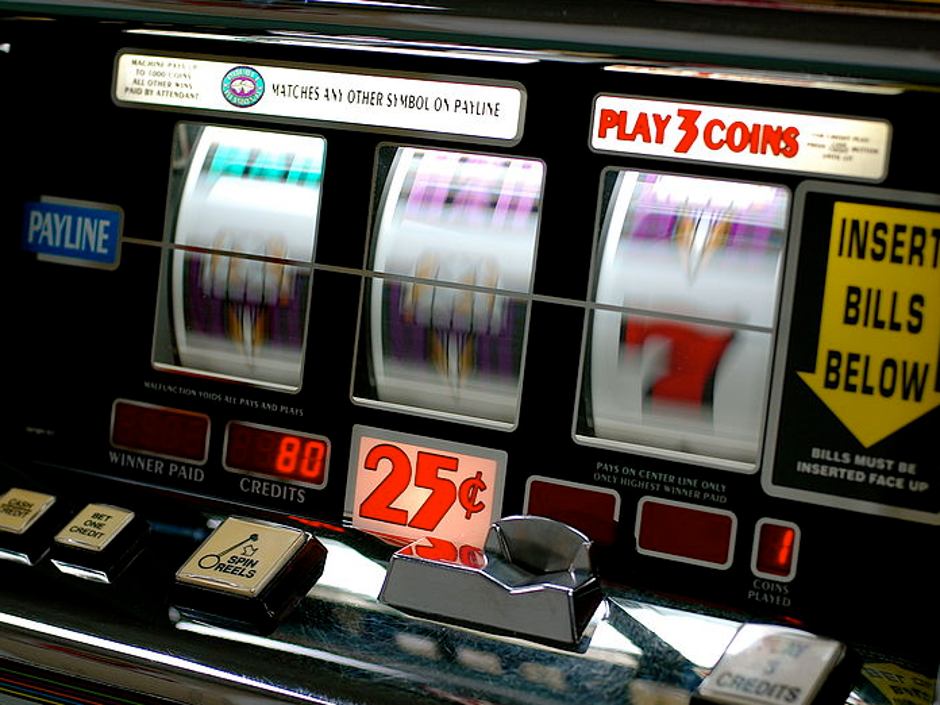
Identifying High-Payout vs. High-Entertainment Options

When selecting a casino game, you must deliberately choose between high-payout versus entertainment-driven gameplay. High-payout options, like video poker or blackjack with optimal strategy, prioritize a low house edge and strong return-to-player percentages, appealing if your goal is maximizing bankroll longevity. Conversely, high-entertainment options, such as feature-rich slots with cascading reels or interactive bonus rounds, offer immersive experiences and frequent volatility spikes but typically carry lower theoretical returns. Your decision hinges on whether you value statistical advantage or experiential thrill. Align your choice with your personal definition of winning—sustained cash or engaged amusement.
Comparing Volatility: Low Risk vs. High Reward Experiences
When picking a game, understanding volatility for casino game selection is key to matching your tolerance. Low volatility slots offer frequent, small wins, keeping your bankroll steady and extending playtime—ideal for cautious sessions. In contrast, high volatility games deliver rare but massive payouts, creating thrilling, high-risk swings perfect for thrill-seekers chasing a jackpot. The core choice lies between predictable returns and the adrenaline of a potential life-changing spin. Your decision here directly dictates whether you enjoy a calm, prolonged experience or a dramatic, high-stakes ride.
Understanding House Edge: What It Means for Your Bankroll
Understanding house edge is critical for your bankroll because it directly dictates your expected losses over time. A game with a 0.5% edge, like blackjack with basic strategy, slowly chips at your funds, while a slot with a 10% edge can rapidly deplete them. You must view the house edge not as a short-term threat, but as the long-term cost of play. This percentage tells you how much of every bet the casino keeps on average, so choosing lower-edge games stretches your bankroll further and grants you more playing time for your money.
- Compare house edges across games; baccarat (banker bet) often sits near 1.06%, while keno can exceed 25%.
- Use edge percentages to calculate your expected hourly loss: (bet size x hands per hour x house edge).
- Prioritize games with edges under 2% to preserve your bankroll for longer sessions.
- Never assume a small edge is irrelevant—over hundreds of bets, it compounds into significant loss.
Key Features That Define a Quality Gaming Experience

A quality gaming experience in casino games hinges on game mechanics that create genuine tension and anticipation, such as balanced return-to-player rates and volatile payout structures. The most engaging titles offer clear, responsive user interfaces and seamless animation that make every spin or hand feel fluid and consequential. A truly excellent game respects your time by allowing instant decision-making without frustrating delays. Essential features like adjustable bet limits, auto-play options, and detailed paytable access empower you to control the pace and risk. Finally, cohesive audiovisual design—from tactile sound effects to thematic graphics—immerses you in the experience rather than distracting from the core action.
Return to Player Percentages and Their Impact on Wins
Return to Player (RTP) percentages define the theoretical long-term payout a slot or table game returns to players. A 96% RTP means for every $100 wagered, the game statistically returns $96 over millions of spins, directly impacting your win potential. Understanding RTP variance is critical: high-RTP slots offer more frequent smaller wins, while lower RTP games often have larger but rarer payouts. The RTP does not guarantee session results, but choosing games with higher percentages mathematically reduces the house edge over time.
- RTP is calculated over millions of rounds, not short sessions.
- Two games with the same RTP can have vastly Parimatch different volatility affecting win frequency.
- Always check the game’s RTP in the paytable or help menu before playing.
Bonus Rounds, Free Spins, and In-Game Multipliers Explained
Bonus rounds, free spins, and in-game multipliers form the core of interactive reward mechanics in casino games, each serving a distinct purpose in player engagement. A bonus round typically unlocks through specific symbol combinations, offering a separate mini-game with fixed payout potential. Free spins function as cost-free reel rotations, often carrying sticky wilds or escalating multipliers that compound with each successive spin. In-game multipliers apply directly to winning combinations during base play or feature rounds, multiplying the payout by a set factor. These three elements logically sequence: free spins trigger a feature, within which a multiplier may apply, while bonus rounds provide a distinct, high-variance opportunity. Their practical value lies in amplifying volatility and extending playtime without requiring additional bets.
Progressive Jackpots: How They Accumulate and Trigger
A progressive jackpot accumulates by channeling a small percentage of each player’s wager into a shared prize pool, which grows continuously until triggered. The trigger occurs randomly or through a specific combination of symbols, often requiring maximum bet placement to be eligible. This mechanic creates a high-tension dynamic where the potential payout can reach life-changing sums, directly elevating the perceived value of the game session.
- Each bet contributes a fixed fraction (e.g., 1–5%) to the jackpot meter, visible to all players.
- Trigger conditions vary: some jackpots activate on any spin, while others require a particular scatter or bonus icon alignment.
- Linked machines or networked games pool contributions from multiple players, accelerating prize growth exponentially.
Practical Tips for Managing Your Money at the Tables
Begin by setting a strict budget for your session, and consider this money already spent. The core principle is to never chase losses; instead, accept a predetermined loss limit as the cost of entertainment. Divide your total bankroll into smaller, equal units for each bet, typically 1-5% of your budget. This method, called bet sizing, prevents a single losing streak from wiping you out. Always walk away when you hit your win goal, as the house edge ensures your profits will erode over time.
The moment you double your session budget, pocket half the winnings immediately to lock in profit.
Finally, keep your playing sessions short—no more than 60 minutes—to maintain focus and discipline, reducing impulsive decisions that drain your funds.
Setting Loss Limits and Knowing When to Walk Away
Setting a strict loss limit before you sit down is the single most disciplined action you can take. Decide on a specific dollar amount you are willing to lose, and treat it like an entry fee to the game. Once that money is gone, knowing when to walk away is non-negotiable; you must stand up immediately, no exceptions. This prevents the spiral of chasing losses, which erodes your bankroll and composure. Protecting your capital for future sessions is more valuable than hoping for a single miraculous recovery. Your self-control at that moment defines your overall success at the tables.
Bankroll Allocation for Different Game Speeds
Your bankroll must be sliced according to game speed. For fast-paced slots or speed blackjack, where hundreds of spins or hands occur hourly, allocate a smaller session stake per bet—such as 1% of your total bankroll—to survive inevitable volatility. Slower games like live baccarat or poker allow for larger bets, up to 5%, because fewer decisions reduce risk exposure per hour. This ensures you maximize playtime and avoid busting early. Speed-based bankroll allocation is critical; a furious set of spins can drain 20 bets in minutes, while a slow poker hand may last 15.
Question: What is the ideal bet size for high-speed slots versus slow table games?
Answer: For high-speed slots, bet no more than 1% of your total bankroll per spin; for slow table games, you can safely wager up to 5% per hand.
Using Betting Strategies Without Increasing Risk
A common misconception is that betting progressions inherently raise stakes. However, you can employ flat-betting strategies to maintain consistent wager sizes regardless of past outcomes, which mathematically neutralizes the house edge without increasing your risk of ruin. For example, using the Martingale system by doubling after a loss exponentially magnifies potential exposure. Instead, a “1-3-2-6” system for even-money bets limits the total capital at risk per cycle, as a single loss only costs one or two units. This controls variance by capping maximum drawdown on each sequence.
- Set a fixed unit size (e.g., 1% of your bankroll) and never deviate, even after consecutive wins.
- Use a “stop-loss” per session that equals three times your starting wager total, preventing emotional recovery bets.
- Apply the “Paroli” system, which only doubles after a win but resets to the base unit after three consecutive wins, capping exposure.
How to Evaluate Game Mechanics Before You Play
Before you spin or hit “deal,” check the Return to Player (RTP) percentage; a higher RTP means you’ll theoretically lose less over time. Look for the volatility or variance rating—low volatility pays small wins often, while high volatility offers bigger but rarer payouts. For slots, examine the paytable to see how winning combinations form and if features like free spins trigger often. In table games, evaluate the house edge on different bets; a Pass Line wager in craps has much better odds than a hardways bet. Understanding these mechanics helps you choose games that match your bankroll and play style, not just your luck.
Reading Pay Tables and Symbol Values Quickly
Before committing credits, quickly scanning a slot’s pay table reveals which symbols offer the highest multipliers. Focus on high-value symbol identification by noting the top three paying icons, as these drive bonus rounds. Next, check if wilds substitute for all symbols except scatters. For efficiency, follow this sequence:
- Locate the return-to-player percentage, typically displayed at the table’s top.
- Compare payouts for three, four, and five-of-a-kind combos to gauge volatility.
- Note any unique symbol-specific rules, such as stacked wilds or locked scatters.
This approach lets you assess a game’s potential payout structure within seconds, avoiding wasted play on low-return mechanics.
Testing New Titles with Free Demos or Practice Modes

Before wagering real money on an unfamiliar slot or table game, assess its risk-reward ratio through a free demo or practice mode. This allows you to evaluate volatility, feature triggers, and payout patterns without financial exposure. Navigate through bonus rounds to see how frequently they activate. Test different bet sizes to understand how they influence the game’s tempo. Use the practice credits to memorize the symbol hierarchy and special rule exceptions. A thorough dry run reveals whether the game’s mechanics align with your preferred playing style before you commit any funds.
- Identify the game’s volatility by observing win frequency and size during 50–100 demo spins.
- Verify if bonus features (free spins, multipliers, pick-a-prize) activate as often as the paytable suggests.
- Learn the exact hit frequency of wilds and scatters in the free mode to avoid misjudging their value live.
- Determine the minimum and maximum active paylines required to trigger the game’s core mechanics.
Checking for Mobile Compatibility and Touch Controls
Before committing to a slot or table game, mobile touch responsiveness determines whether gameplay feels fluid or frustrating. Test how buttons react to taps versus swipes, especially on spinning reels or adjusting bets. A casino game that lags on a phablet may misread a double-tap, causing accidental high-stakes wagers. Pinch-to-zoom for card tables should snap cleanly, not distort controls. If the interface shoves a cramped spin button near the edge, you risk “fat-finger” errors during bonus rounds.
Q: How can I verify touch controls work smoothly before playing for real money?
A: Load the game’s demo mode on your device, then rapidly tap the spin or deal button five times—any delayed or missed input signals poor mobile optimization.
Common Questions Beginners Ask Before Playing
New players often ask, “Which game is easiest to start with?” Slots are popular because they require no strategy—just spin and hope. Many also wonder, “How do odds work?” every casino game has a built-in house edge, meaning the casino statistically wins over time. A common worry is, “Can I practice for free?” Most sites offer demo modes to learn rules without risking cash. Beginners also ask, “What’s a bankroll?” It’s simply the money you set aside for gambling, separate from bills.
A key insight: never chase losses—set a limit before playing and stick to it.
Finally, “Are bonuses helpful?” Welcome bonuses give extra play money, but always check wagering requirements first.
What Is the Best Game for Someone Who Never Played Before?
For a first-time player, the best game is usually slot machines. They require no skill, strategy, or knowledge of complex rules—just pressing a button or pulling a lever. This makes them the most accessible entry point into casino gaming. A beginner can focus purely on the experience of spinning reels without any pressure to make tactical decisions. Low-stakes slot machines further reduce risk, allowing new players to learn pacing and bankroll management gradually. Unlike table games, slots remove the intimidation of engaging with a dealer or other players.
- Slots have no learning curve and offer instant gameplay.
- They allow small minimum bets, minimizing financial pressure.
- Visual and audio feedback makes the game engaging for a newcomer.
Can I Actually Influence the Outcome of These Games?
For most casino games, the short answer is no—you can’t truly influence the outcome. Games like slots and roulette rely on Random Number Generators or physical mechanics, so each spin is independent. In blackjack, your decisions affect your hand, but the dealer’s cards and deck order remain beyond your control. The house edge is baked in, meaning the math is stacked against any strategy long-term. Skill-based games like poker let you influence results through betting and psychology, but luck still plays a massive role.
- Slots and roulette are pure chance; no button or pattern changes the result.
- Blackjack strategy reduces the house edge but can’t guarantee wins.
- Poker skill matters, but you need consistent luck against other players.
- No system or “lucky” ritual alters the game’s programmed outcome.
How Do I Know If a Machine Has Recent Payouts?
You can look for a recent payout indicators on the machine’s display, as many modern slots show a “last win” or “paid” amount near the credit meter. Some casinos place a small digital ticker showing recent jackpot hits on the cabinet. A machine with coins or tickets spilling from the tray often signals a fresh payout, though staff clear these quickly. Observing idle machines with players nearby may reveal if someone just cashed out. Q: How do I know if a machine has recent payouts? A: Check the cashout tray for leftover tickets or coins, and look for a “last paid” line on the screen.
